




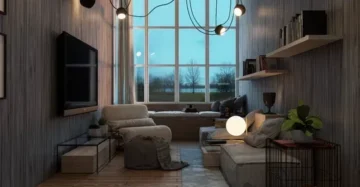
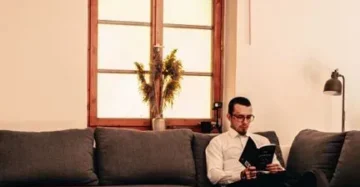
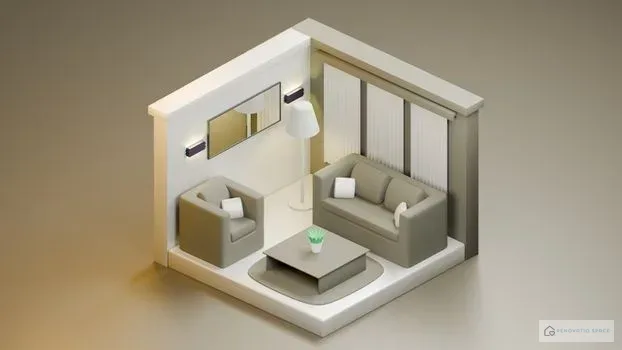
A narrow room poses special challenges for furnishing. Often it feels cramped, and natural movement is restricted by poorly placed furniture. Yet with a thoughtful concept, you can arrange cozy seating for conversation even in narrow rooms, making it both functional and stylish. In this article, we show you proven strategies to turn a tight floor plan into an inviting meeting point.
Why the right arrangement matters
Challenges of narrow rooms
Narrow rooms often face the problem of being perceived as a corridor or passageway. The natural tendency is to place furniture along the long walls, which makes the room appear even longer and narrower. Additionally, there is often insufficient space for a classic seating group with a sofa and armchairs. Without targeted planning, barriers arise that hinder conversation—such as when two people sit facing each other across a table that is too wide.
Benefits of a good conversation arrangement
A well-thought-out arrangement transforms a narrow room into a place of encounter. It promotes eye contact, eases communication, and creates an atmosphere of closeness. At the same time, traffic areas remain free, allowing you to move unhindered. With the right furniture and clever zoning, a narrow space becomes the heart of your home.
Basic planning for narrow rooms
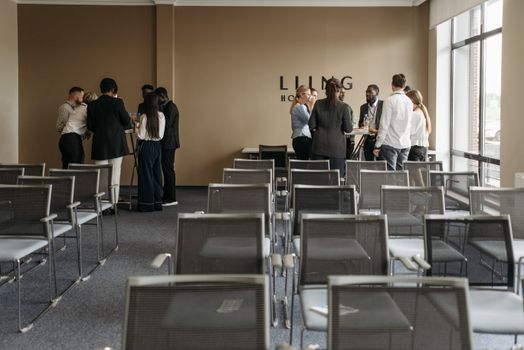
Measure the room and consider traffic paths
Before buying furniture, measure the exact dimensions of the room: length, width, height, as well as positions of doors, windows, and radiators. Note the minimum width of traffic paths—ideally 60 to 90 cm for one person, 120 cm for two people side by side. Draw a floor plan and mark natural walkways, such as from the entrance to the window or kitchen. This ensures your conversation group is not in the way.
Zoning: Conversation area as a focus
Set a clear focal point in the room. Arrange the seating so that it forms a self-contained unit. Retreat areas like reading nooks or storage can be placed at the ends of the room. A rug or special lighting can visually separate the conversation zone without dividing the room.
Furniture selection for narrow floor plans
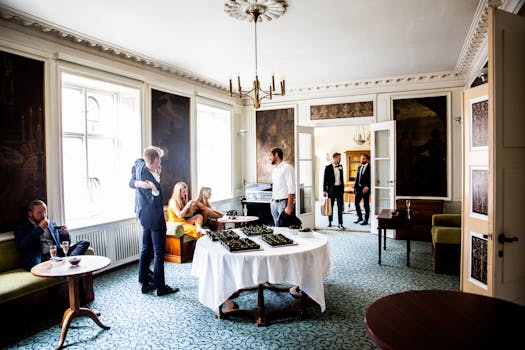
Choose furniture with slim proportions: narrow sofas (depth under 90 cm), delicate armchairs, and slender tables. Avoid bulky upholstered furniture that overwhelms the space. Folding or stackable seating is ideal for creating space when needed. Benches under windows or along walls also make optimal use of width.
Proven arrangements for conversation
Opposite: Sofas and armchairs
Place two narrow sofas or one sofa and two armchairs directly facing each other. The distance between seating surfaces should be 1.2 to 1.8 meters to ensure a comfortable conversation distance. A narrow, long table in the center serves as a surface. This arrangement works especially well for rooms at least 2.5 meters wide.
L-shaped setup with a bench
Place a sideboard or narrow bench against the end wall of the room. In front of it, position a sofa at a right angle to the wall. Add an armchair or stool on the other side. This L-shape creates an open, inviting situation and requires less room depth.
Seating group around a coffee table
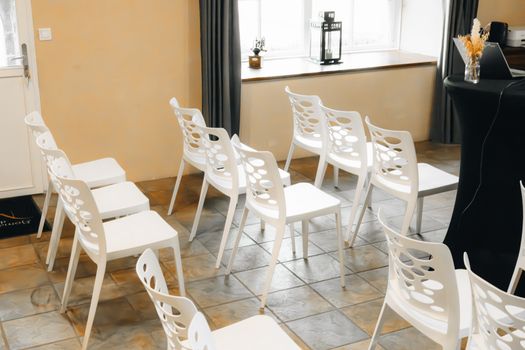
Place two narrow armchairs or a small sofa around a round or oval coffee table. Round tables have no corners and feel airier. This arrangement is ideal when the room is particularly narrow (under 2.2 meters wide). A rug under the group defines the area.
Furniture pieces for tight spaces
Narrow sofas and chaise lounges
Look for sofas with slim armrests and shallow seat depth (40–50 cm). Models with an integrated reclining function can double as a guest bed. Light-colored upholstery makes the room appear visually larger.
Folding and stackable chairs
Folding chairs can be stored space-savings and quickly set up for guests. Stackable chairs can be piled when not in use, providing flexible seating options.
Multifunctional ottomans and poufs
Ottomans with storage (e.g., for blankets or magazines) combine seating and storage. Poufs can serve as footrests, extra seating, or small side tables. Choose models with wheels for easy moving.
Optical tricks for more spaciousness
Colors and patterns for narrow rooms
Light, cool colors (white, light gray, pastels) make the room feel larger. Use strong accents only in small doses, such as through pillows or art. Vertical stripes on walls or textiles optically stretch the room.
Strategic use of mirrors and light sources
A large mirror on the long side reflects light and depth. Place it opposite a window to double daylight. Indirect lighting (LED strips, floor lamps) creates a cozy atmosphere without cluttering the room.
Rugs to define the seating group
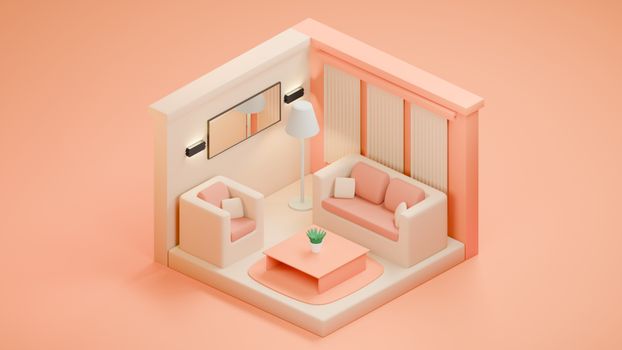
A rug under the seating group marks the zone and provides cohesion. Choose a rug large enough that all chairs sit on it (at least the front legs). A light, solid-colored rug makes the room feel more open than a patterned one.
Practical examples for narrow rooms
Example 1: Long room with window front
Place a narrow sofa parallel to the window front and position two armchairs at a 90-degree angle in front of it. A slender coffee table made of glass or light wood between the sofa and armchairs. Beige rug. Mirror on the opposite wall. Result: bright, open conversation island.
Example 2: Narrow living room with passageway
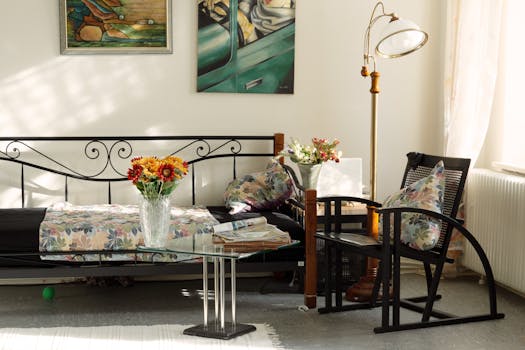
Use a narrow bench along one wall and place two stools or armchairs opposite. Ensure the passage remains at least 90 cm wide. A round side table in the center. Wall shelves above the bench for decor—saves floor space.
Example 3: Open floor plan with dining area
Integrate the seating group in the middle of the room. Use a narrow sofa as a room divider, separating the living area from the dining area. Two armchairs on the other side with a narrow table. This creates a cozy conversation area without walls.
Conclusion and next steps
Summary of tips
A narrow room doesn’t have to be limiting. With precise measurements, the right furniture selection, and a clever arrangement, you create an inviting seating group for conversation. Use light colors, mirrors, and slim furniture. Don’t forget to keep traffic paths clear and emphasize the conversation zone with rugs or lighting.
Inspiration for your project
Get inspired by our living room ideas. Visit our gallery with images of narrow rooms furnished with creativity and style. Share your own experiences in the comments or contact us for personal consultation. Turn your narrow room into a place of encounter!