







Introduction: Why the Right Layout Transforms Your Bedroom
The bedroom is more than just a place to sleep – it’s your personal retreat that should promote recovery and relaxation. A well-thought-out room layout can make the difference between a restless night and restful sleep. In this article, we show you the most common bedroom layout mistakes and how to avoid them to optimally design your space.
The Importance of a Thoughtful Room Layout
A well-planned bedroom layout considers not only aesthetic aspects but also functional needs. When furniture and accessories are strategically placed, a harmonious overall picture emerges that enhances well-being and sleep quality. Studies show that a cluttered or poorly arranged environment can cause stress and negatively affect sleep. Therefore, it is worth investing time in planning.
How Mistakes Affect Sleep Comfort
A common mistake is ignoring basic rules such as traffic flow or lighting direction. These seemingly small details can make you feel uncomfortable in your own bedroom. For example, a wrongly placed dresser blocks access to the bed, or a mirror reflects disturbing light. By knowing the typical pitfalls, you can avoid such problems from the start and turn your room into a true oasis of well-being.
Mistake 1: Placing the Bed on the Wrong Wall
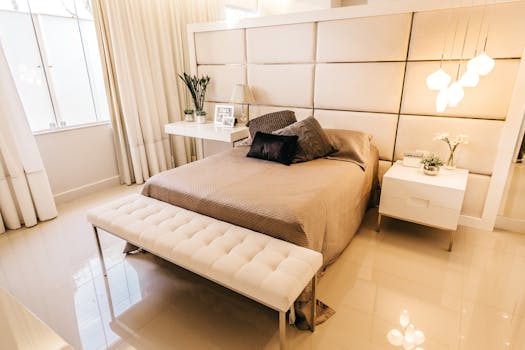
The position of the bed is the centerpiece of any bedroom layout. A common mistake is placing the bed directly under a window or against an exterior wall, where drafts or direct sunlight can disturb sleep. Also, positioning the bed in a corner can negatively affect spatial perception.
Problems from Drafts and Light Sources
Drafts from windows or doors can cause unpleasant drafts, especially in the cold season. Additionally, bright morning light through an insufficiently darkened window can disrupt the sleep rhythm. Make sure not to place the bed directly in the airflow from heaters or air conditioners. Use heavy curtains or blinds to control light.
Optimal Placement for Harmony and Sleep Quality
Ideally, the bed should be placed against a solid interior wall that protects from drafts while providing a sense of security. The head of the bed should be against a wall without windows or doors to create a calm atmosphere. In many cultures, Feng Shui principles are also applied, recommending a position where the door is visible but not directly in line with the bed. This promotes a sense of safety and control.
Tips for Small and Asymmetrical Rooms
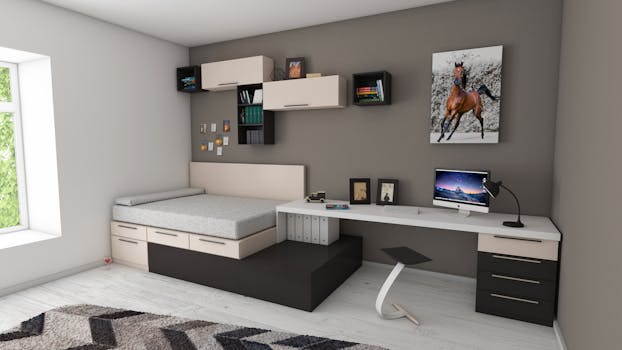
In small or irregularly shaped rooms, bed placement can be challenging. Use corners cleverly – place the bed diagonally to make the room seem larger. Asymmetrical rooms benefit from central bed placement that draws focus and creates a balanced look. Use bedside tables or shelves on the sides to structure the space.
Mistake 2: Too Much Furniture in Too Little Space
A cluttered bedroom not only looks restless but can also impair functionality. Many tend to choose overly large or too many pieces of furniture, making the room feel oppressive.
Overcrowding and Its Effects on Spatial Perception
When the bedroom is packed full, a feeling of tightness and disorder quickly arises. This can lead to increased stress and reduce sleep quality. A good guideline is that about 60-70% of the floor should remain free to maintain an open and airy atmosphere. Think carefully about which furniture is really necessary – a large wardrobe may be practical but often blocks unnecessary space.
Minimalist Approaches for More Spaciousness
A minimalist style can work wonders: reduce to the essentials – bed, nightstand, and a small closet. Light colors and clean lines make the room appear larger. Use open shelves instead of massive cabinets to maintain airiness. Every piece of furniture should have a clear function without dominating the room.
Multifunctional Furniture as a Space-Saving Solution

In small bedrooms, multifunctional furniture is ideal. A bed with built-in drawers offers storage for bedding, while a desk that also serves as a vanity saves space. Foldable or modular furniture can also be flexibly adapted to changing needs and prevents overcrowding.
Mistake 3: Ignoring Traffic Flow
The way you move in the bedroom should be intuitive and barrier-free. Ignoring traffic flow leads to frustration and inconvenience in daily life.
Avoiding Narrow Passages and Trip Hazards
Ensure there is enough space between furniture – at least 60-80 cm for walkways. Avoid placing furniture directly in front of doors or in the middle of the room, as this creates trip hazards. Especially at night when the light is dimmed, obstacles can be dangerous.
Creating Clear Pathways in the Room
A clear path from the bed to the bathroom or door facilitates daily routines. Orient yourself to natural movement: arrange the path so you don’t have to navigate around furniture. In large rooms, carpets or runners can visually mark and guide these pathways.
Furniture Arrangement for Natural Movement
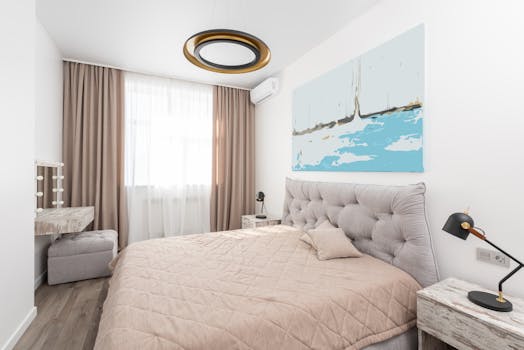
Arrange furniture so it doesn’t cut through the room but divides it into zones. The bed should not block the main pathway. Place nightstands and dressers along walls to keep the central area clear. Symmetrical arrangement can improve flow, but asymmetrical solutions are also possible as long as they don’t hinder movement.
Mistake 4: Incorrect Placement of Mirrors and Windows
Mirrors and windows are important design elements, but their wrong positioning can disturb well-being. A mirror opposite the bed or a window that causes glare are typical mistakes.
Mirror Opposite the Bed – Disturbing Peace
A mirror directed straight at the bed can cause unpleasant reflections at night or create a feeling of restlessness. From a Feng Shui perspective, this is avoided because it distracts energy. It is better to place mirrors on side walls or behind doors where they are not directly visible. If a mirror is unavoidable, cover it at night.
Window Position and Its Influence on Lighting Conditions
Windows should be positioned so that morning light flows in gently but does not glare. A bed directly under a window can lead to drafts and disturbing light. Use curtains or blinds to regulate light and heat. In southern locations, slight darkening can help control room temperature.
Practical Solutions for Mirrors and Window Surfaces
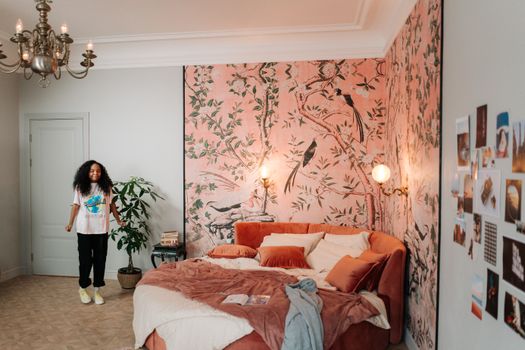
If you want a large mirror in the bedroom, mount it on a wall that is not in the bed’s line of sight. For windows, heavy curtains or blinds can completely darken the room when needed. Window films can also reduce light intensity without affecting the view.
Mistake 5: Lack of Room Zoning
A bedroom has different functions: sleeping, dressing, perhaps even working or relaxing. Without clear zoning, the room appears chaotic and unstructured.
Why Clear Areas for Sleeping, Dressing, and Relaxing Are Important
Each activity needs its own area to promote focus and calm. The sleeping area should be quiet and shielded, the dressing area practical and well-lit, the relaxation area cozy. Without separation, the functions mix and lead to restlessness.
Visual and Spatial Separation Using Rugs, Shelves, or Curtains
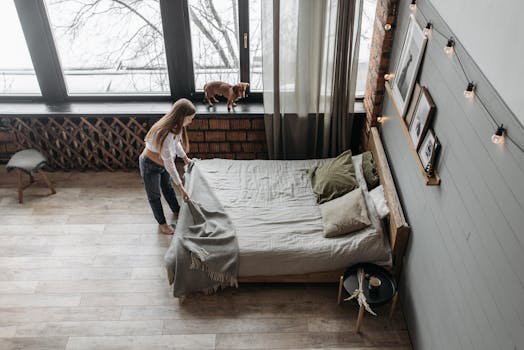
Use rugs to define different zones – a soft rug under the bed marks the sleeping zone, a runner in the dressing area. Room dividers like open shelves or curtains can delineate areas without shrinking the room. A reading chair with a floor lamp creates a separate corner for relaxation.
Examples of Successful Zoning in Different Bedroom Sizes
In a large bedroom, you can use a half-shelf as a partition wall to separate a dressing area. In small rooms, a curtain that covers the wardrobe or a rug that highlights the bed zone suffices. A compact desk can be placed in a corner lit by a wall lamp.
Conclusion: With the Right Layout to Greater Well-being
The right bedroom layout is not rocket science but requires some planning. By avoiding the five most common mistakes – wrong bed position, over-furnishing, ignored traffic flow, incorrect mirror and window placement, and lack of zoning – you create a space that promotes recovery and relaxation.
Summary of Key Points
- Place the bed against a solid interior wall, not under windows.
- Ensure sufficient freedom of movement and clear pathways.
- Position mirrors so they do not reflect the bed.
- Create zoning through rugs and furniture.
Motivation to Implement the Tips
Every mistake is an opportunity for improvement. Start with small changes – move the bed or remove unnecessary furniture. After just a few adjustments, you will feel the difference. Your bedroom will become a place of peace where you can recharge. Try it out and enjoy the positive effect on your well-being.