









Bedroom lighting plays a crucial role in well-being and sleep quality. It influences not only the atmosphere but also our natural sleep-wake rhythm. In this FAQ article, we answer the most common questions about optimal lighting for your bedroom – from color temperature to dimmable solutions and choosing the right bulbs.
Which color temperature is ideal for a bedroom?
Color temperature is measured in Kelvin (K) and determines whether light appears warm or cool. For bedrooms, warm white light at 2700–3000 Kelvin is ideal, as it creates a cozy and relaxing atmosphere and prepares the body for the night.
Warm white for relaxation and coziness
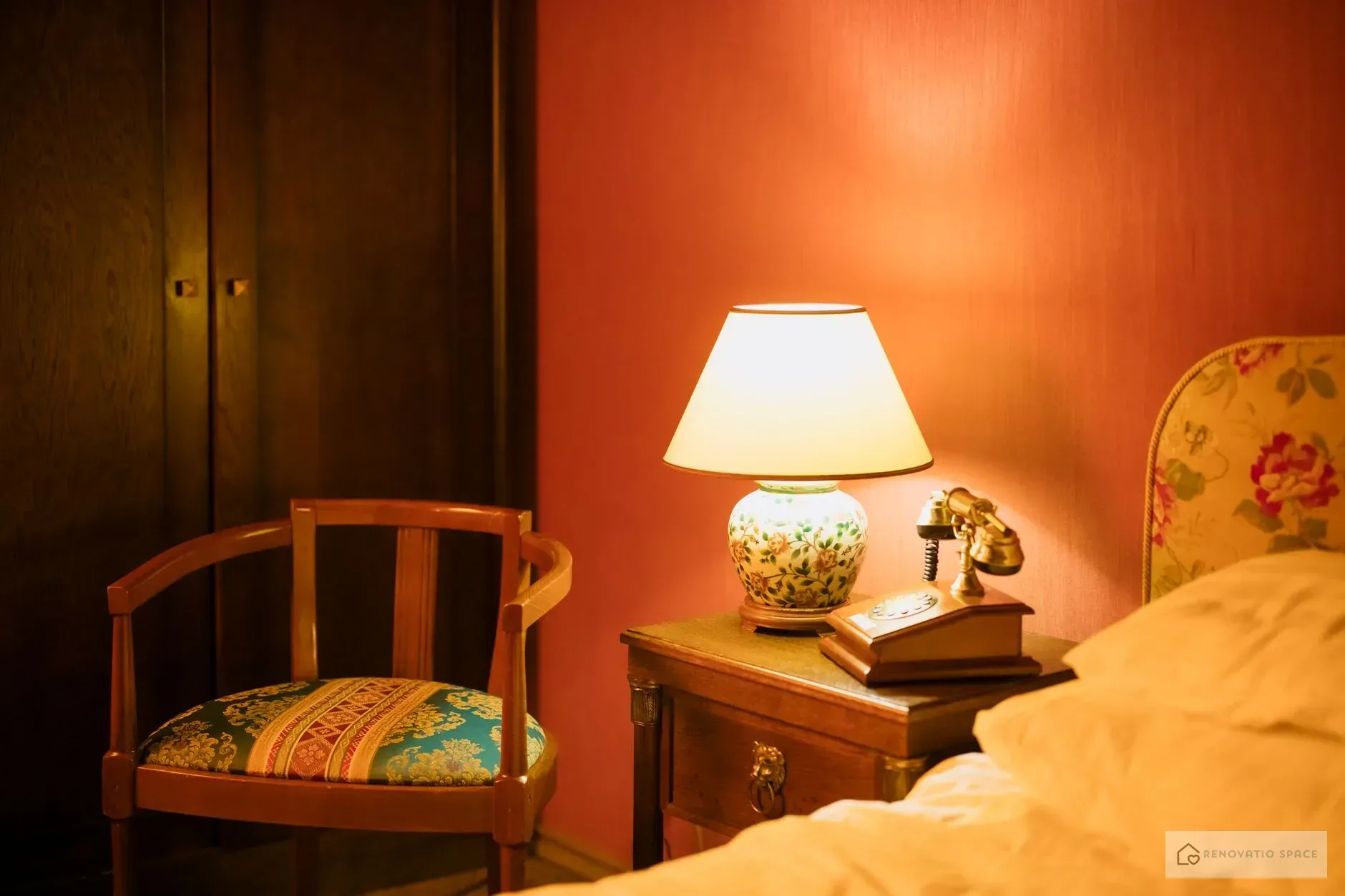
Warm white light (2700–3000 K) creates a soft, inviting mood reminiscent of candlelight or sunset. It reduces the production of the wake hormone cortisol and promotes the release of melatonin, making it easier to fall asleep.
Why cool white light is less suitable for the bedroom
Cool white or daylight (above 4000 K) has an activating effect and can disrupt the sleep-wake rhythm. It is often associated with offices or work areas and is therefore not suitable for basic lighting in the bedroom. Use cool white light at most for the closet or dressing table if focused work is needed there.
Recommendation: 2700–3000 Kelvin for basic lighting
For main lighting, such as ceiling lights, we recommend lamps with 2700–3000 K. This range is also optimal for bedside lamps and indirect lighting. When purchasing, check the Kelvin rating on the package.
Should bedroom lighting be dimmable?
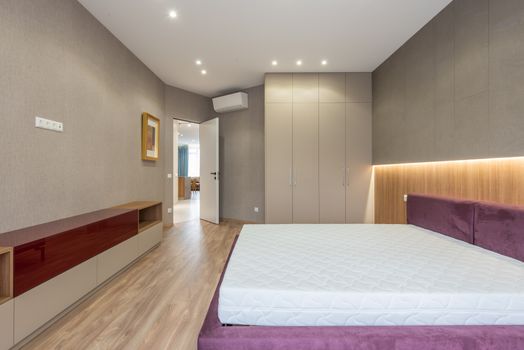
Yes, dimmable lighting is highly recommended for the bedroom. It allows you to adjust brightness according to mood and activity – from bright light for reading to soft light for relaxation.
Advantages of dimmable lights for evening routine and reading
With dimmable lights, you can seamlessly adapt the lighting to your needs: bright light for focused reading, dimmed light for the evening routine, or indirect lighting for a romantic atmosphere. This supports the natural transition from wakefulness to sleep.
Compatible bulbs and dimmer selection
Not all bulbs are dimmable. Look for the “dimmable” label on LEDs and halogen lamps. For LED lights, you often need special dimmers designed for low loads. Leading-edge or trailing-edge dimmers are common. Check compatibility with your bulb.
Alternative: Stepped brightness adjustment
If dimming is not possible, lights with stepped brightness adjustment are an option, for example via a rotary switch or a remote control with multiple levels. Smart lighting with app control is also a flexible solution.
Ceiling lights vs. bedside lamps vs. wall lights – which is better?
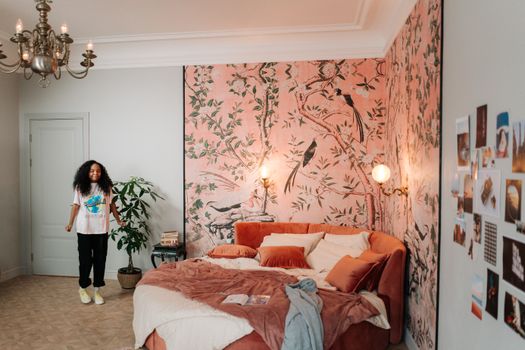
The best solution combines different light sources to create balanced lighting. Each type of light has its strengths.
Ceiling lights for uniform basic brightness
Ceiling lights such as pendant lights or recessed spotlights provide uniform basic lighting throughout the room. Models with warm white light and dimming function are ideal. For small to medium-sized bedrooms, a central ceiling light is usually sufficient.
Bedside lamps for direct light in bed
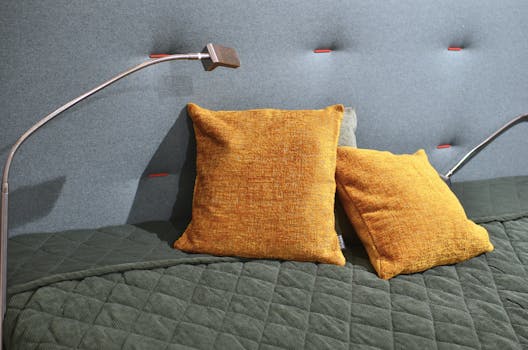
Bedside lamps offer focused light for reading or the evening routine. They should be about 50–70 cm above the mattress to avoid direct glare. Adjustable arms or shades are practical.
Wall lights for indirect accents and space saving
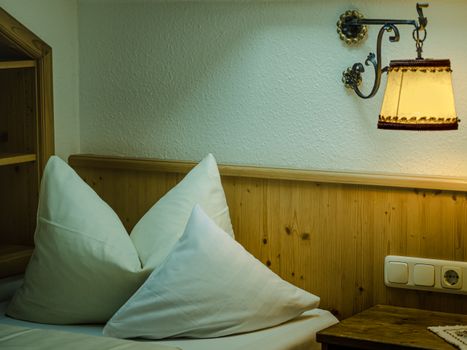
Wall lights save space and create indirect, atmospheric lighting. They are particularly suitable for small bedside tables or as accent lighting above the bed. Models with a swivel arm offer flexible direction.
Which bulbs are best suited?
The choice of bulb affects brightness, color temperature, energy efficiency, and lifespan.
LED bulbs: energy efficiency and lifespan
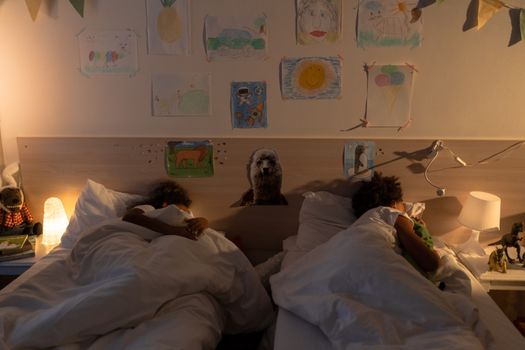
LEDs are the first choice for bedrooms: they consume up to 80% less energy than incandescent bulbs, last up to 25,000 hours, and are available in various color temperatures. Look for high color rendering (CRI > 80) for natural skin tones.
Incandescent vs. halogen: warmth and color rendering
Incandescent bulbs (largely banned in the EU since 2012) and halogen lamps offer very warm light with high color rendering but have low energy efficiency and a short lifespan (approx. 2000–4000 hours). They are no longer recommended except for decorative purposes.
Smart lighting for individual scenarios
Smart lights such as Philips Hue, IKEA TRÅDFRI, or Osram Lightify allow control via app, voice command, or timer. You can automate color temperature and brightness according to the time of day, for example, waking up with cool light in the morning and relaxing with warm light in the evening.
How many light sources do I need in the bedroom?
The ideal number depends on room size and individual needs, but a combination of general, accent, and task lighting is recommended.
General lighting, accent lighting, and task light
- General lighting: A ceiling light for uniform brightness.
- Accent lighting: Wall lights or indirect lighting (e.g., LED strips behind the bed) for atmosphere.
- Task light: Bedside lamps for reading and mirror lights for the dressing area.
Recommended light zones for a harmonious overall look
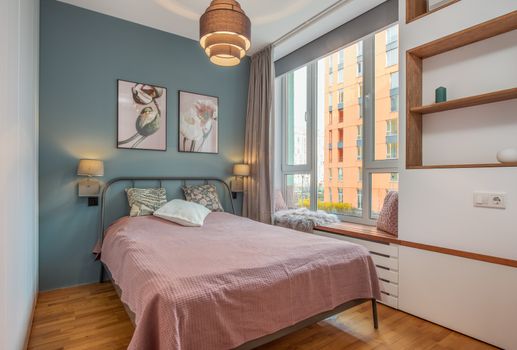
Divide the room into zones: sleep zone (dimmed light), reading zone (bedside lamp), dressing zone (closet mirror with lighting), lounge zone (armchair with floor lamp). This creates a flexible system.
Example: a medium-sized bedroom with 3-4 lights
A medium-sized bedroom (approx. 16 m²) can ideally be equipped with a ceiling light, two bedside lamps, and a decorative wall light or floor lamp. Smart lights with scene control replace several individual solutions.
Can I install a ceiling light without drilling?
Yes, there are several ways to attach a ceiling light without drilling, especially in rental apartments.
Adhesive solutions for rental apartments and lightweight lights
Lightweight ceiling lights (under 2 kg) can be attached to the ceiling with strong adhesive pads or mounting tape. Make sure the ceiling is clean and grease-free. Suitable for smooth surfaces such as concrete or textured wallpaper. Removal often leaves no traces.
Surface mounting and cable ducts as alternatives
For lights with cable connections, surface-mounted cable ducts are available that you can run along the ceiling or wall. You can fix the duct with double-sided adhesive tape. Pay attention to the safety distance from flammable materials.
Safety tips for DIY enthusiasts
Only work with the power switched off (turn off the circuit breaker!). For adhesive solutions: only use adhesives suitable for the room temperature. Surface-mounted lights must have sufficient distance from curtains. If unsure, consult an electrician.
Which lighting helps to fall asleep?
The right lighting before bedtime supports melatonin production and makes it easier to fall asleep.
Blue light filters and warm tones before bedtime
Smart lighting with integrated blue light filters reduces the blue light component in the evening. Warm tones (2700 K and below) have a calming effect. Functions like “Sunset” automatically dim the light over 30 minutes before bedtime.
Nightlight options for orientation without disturbance
Nightlights with soft, warm light (up to 50 lm) help with nightly bathroom visits without disturbing the sleeping partner. Models with motion sensors only switch on when needed. Plug-in nightlights are the simplest solution.
Twilight sensors and timers for bedtime
Twilight sensors automatically switch on the lighting when it gets dark. Timer functions dim or switch off the lights after a set time. Smart home systems enable complex bedtime routines.
How much does good bedroom lighting cost?
The price range is wide: from budget-friendly solutions to high-end designer lights.
Budget-friendly entry-level lights (15–40 €)
Inexpensive ceiling lights from hardware stores or online shops (e.g., IKEA, Amazon) offer solid basic lighting. Bedside lamps are available from 15 €. Look for LED-compatible bulbs.
Mid-range options (40–100 €) with more design
In this price range, you will find lights with better workmanship, stylish designs, and often integrated LEDs. Smart lighting starter sets from Philips Hue or OSRAM are in this range (approx. 70–100 € for a lamp plus bridge).
High-end designer lights from 100 €
Designer brands like Artemide, Flos, or Moooi offer lights with exceptional aesthetics, high-quality materials, and long warranties. Bedside lamps or floor lamps can cost 200–1000 €. The price often reflects design, craftsmanship, and exclusivity.
Conclusion: The perfect lighting for your bedroom
The ideal bedroom lighting combines warm white light at 2700–3000 K, dimmable options, and a mix of ceiling, bedside, and wall lights. LEDs are the best choice due to their energy efficiency and longevity. Invest in basic lighting, supplemented by flexible accent and task lamps. Smart systems offer additional convenience. With a budget of 40–100 €, you can already get solid, stylish lighting. Adapt the number of light sources to your room usage and pay attention to low-blue-light tones before bedtime. For more ideas, check out our article on vintage bedroom decor.